
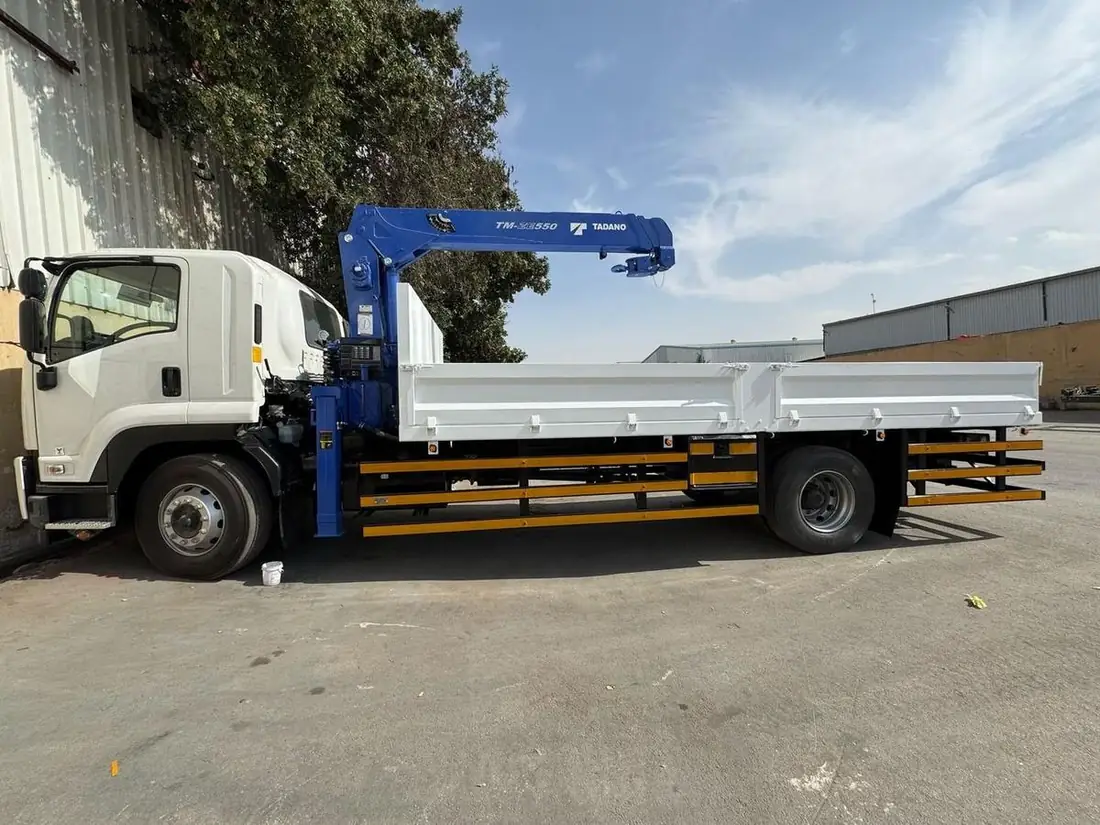
The costliest mistake in truck build-up: buying the chassis first and discovering afterwards that it does not suit the equipment. Four numbers settle it.
1) Net payload
Net payload = permitted gross weight minus kerb weight. Then subtract equipment weight + sub-frame + cargo body + tools, fuel and driver. What remains is your real payload. Write this equation before signing the order.
A worked example: an insulated platform weighing 1,930 kg, plus sub-frame and deck at 700 kg, plus outriggers at 350 kg — about 3 tonnes before a single technician climbs aboard.
2) Wheelbase / cab-to-axle
Not the truck's overall length but the distance behind the cab. Every unit has a minimum and maximum. A 16 m platform typically needs a 6.5–7 m cab-to-axle distance. Shorter means instability at rear reach; longer means sag and stress on the mounts.
3) Axle load distribution
This is where trucks fail technical inspection. Equipment weight does not distribute evenly: a crane behind the cab loads the front axle, a long body loads the rear. Each axle must stay within its limit both stowed and working. It is a simple moment calculation done before fabrication, not discovered afterwards.
4) Power take-off
Specify a factory-fitted PTO and state the aperture and ratio. A chassis without one is not impossible, but it means dropping the gearbox — extra cost and time.
4×2 or 6×4?
- 4×2: lighter, cheaper, easier to manoeuvre in cities. Enough for most platforms and mid-size cranes.
- 6×4: twin rear axles give higher payload and better stability. Needed for heavy units or when significant cargo must travel alongside the equipment.
Details that get forgotten and cost money
- Frame height — affects overall vehicle height and clearance under bridges and gates.
- Suspension type — air suspension is smoother but must be locked out while the crane works.
- Fuel tank and battery box position — often need relocating to make room for the hydraulic tank.
- Warranty — some dealers require build-up approval so the chassis warranty is not voided.
We build on every major make — Mercedes-Benz, Volvo, MAN, Scania, Renault, IVECO, DAF, ISUZU, FUSO, HINO, UD, Hyundai, Daewoo and TATA — and we can supply the chassis itself, new or used. Send us the equipment you need and we will define the correct chassis specification in writing before you buy.