
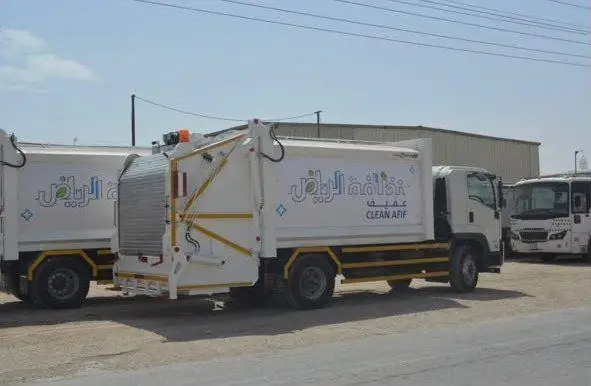
A refuse compactor is not a box on a truck. It is a machine running 8 to 12 hours a day in heat above 45 °C, in contact with abrasive material and corrosive liquid. A wrong choice shows in year two, not year one.
First: size from the contract, not the catalogue
Start from three numbers: bins on the route, their average fill, and trips allowed per day to the landfill. The right capacity finishes the route in two trips at most. Oversizing means dead weight and wasted fuel; undersizing means a third trip that eats the margin.
Second: compaction ratio
Up to 5:1 is good for mixed household waste. But note that the quoted ratio is measured on standard refuse — waste heavy in construction debris or palm fronds gives far less and strains the hydraulics. State the waste type in your enquiry.
Third: the clauses that decide real service life
- Plate thickness and grade: the floor wears first. Ask for high-tensile steel in the floor specifically.
- Tailgate seal: must be gasketed against leachate — leakage is an environmental violation and the main cause of body corrosion.
- Ejector plate: gives complete discharge without raising the body, which is safer than tipping under power lines.
- Corrosion treatment: blast then epoxy prime before topcoat. Without it the body will not survive leachate.
- Bin lifter: must match the container sizes actually in service.
Fourth: safety is not decoration
- Emergency stops on both rear corners, within easy reach of the loader.
- A safe riding step with a switch that inhibits motion while occupied.
- Rear camera and LED work lighting for night shifts.
- Reflective marking and bumpers to Saudi traffic regulations.
Why local fabrication matters
An imported ready-built compactor can look cheaper on the first offer, but the first cylinder or seal that needs replacing means waiting for a shipment. A locally built body on a chassis available in the market means spares from the same workshop, dimensional changes on request, and technical support hours away rather than weeks — plus local content in the evaluation.
We fabricate rear-loading refuse compactors in our Riyadh workshop and mount them on the chassis you choose, in a range of capacities and to a specification written around your contract. Send us the contract scope and bin count and we will propose the capacity and configuration.